Some related Wikipedia entries
- World's Most Livable Cities
- List of United States cities by population density
- List of common misconceptions
- Homelessness
April 26th, 2008 / 1 Comment / Tags: environmental psychology / TrackbackArchitects have suggested that crime can be prevented by manipulating the design and placement of many simple items, such as doors, bus stops, and park benches. Today's airports prevent crime by replacing bathroom entrance doors with right-angle entrances that permit the warning sounds of crime to travel more freely and that reduce the sense of isolation. Countries throughout the world, such as Australia,Canada,Great Britain, Japan, and the Netherlands have used architectural design techniques to prevent crime. The 2000 Sydney Olympics self-consciously employed architecture to reduce crime by modifying landscapes, restricting access to sites, changing parking patterns,and creating visibility around stadiums.
Unfortunately, for the past six decades, American criminal law has focused on the specific characteristics of offenders (such as economic status, race, age, employment status, and mobility) and has largely ignored the location of crime.20 just as individuals can be recidivists, so too can certain places. Minneapolis,for example, three percent of locations are responsible for fifty percent of calls to which police respond, and similar patterns occur in other cities.
A Chicago architecture firm known for their work in low-rise affordable housing.
April 19th, 2008 / 1 Comment / Tags: gadgets / TrackbackA universal constructor is a machine that can replicate itself and - in addition - make other industrial products. Such a machine would have a number of interesting characteristics, such as being subject to Darwinian evolution, increasing in number exponentially, and being extremely low-cost.
A rapid prototyper is a machine that can manufacture objects directly (usually, though not necessarily, in plastic) under the control of a computer.
The RepRap project is working towards creating a universal constructor by using rapid prototyping, and then giving the results away free under the GNU General Public License to allow other investigators to work on the same idea. We are trying to prove the hypothesis: Rapid prototyping and direct writing technologies are sufficiently versatile to allow them to be used to make a von Neumann Universal Constructor.
March 26th, 2008 / 236 Comments / Tags: social justice, planning / Trackback"The Congress for the New Urbanism views disinvestment in central cities, the spread of placeless sprawl, increasing separation by race and income, environmental deterioration, loss of agricultural lands and wilderness, and the erosion of society’s built heritage as one interrelated community-building challenge.
We stand for the restoration of existing urban centers and towns within coherent metropolitan regions, the reconfiguration of sprawling suburbs into communities of real neighborhoods and diverse districts, the conservation of natural environments, and the preservation of our built legacy.
We recognize that physical solutions by themselves will not solve social and economic problems, but neither can economic vitality, community stability, and environmental health be sustained without a coherent and supportive physical framework.
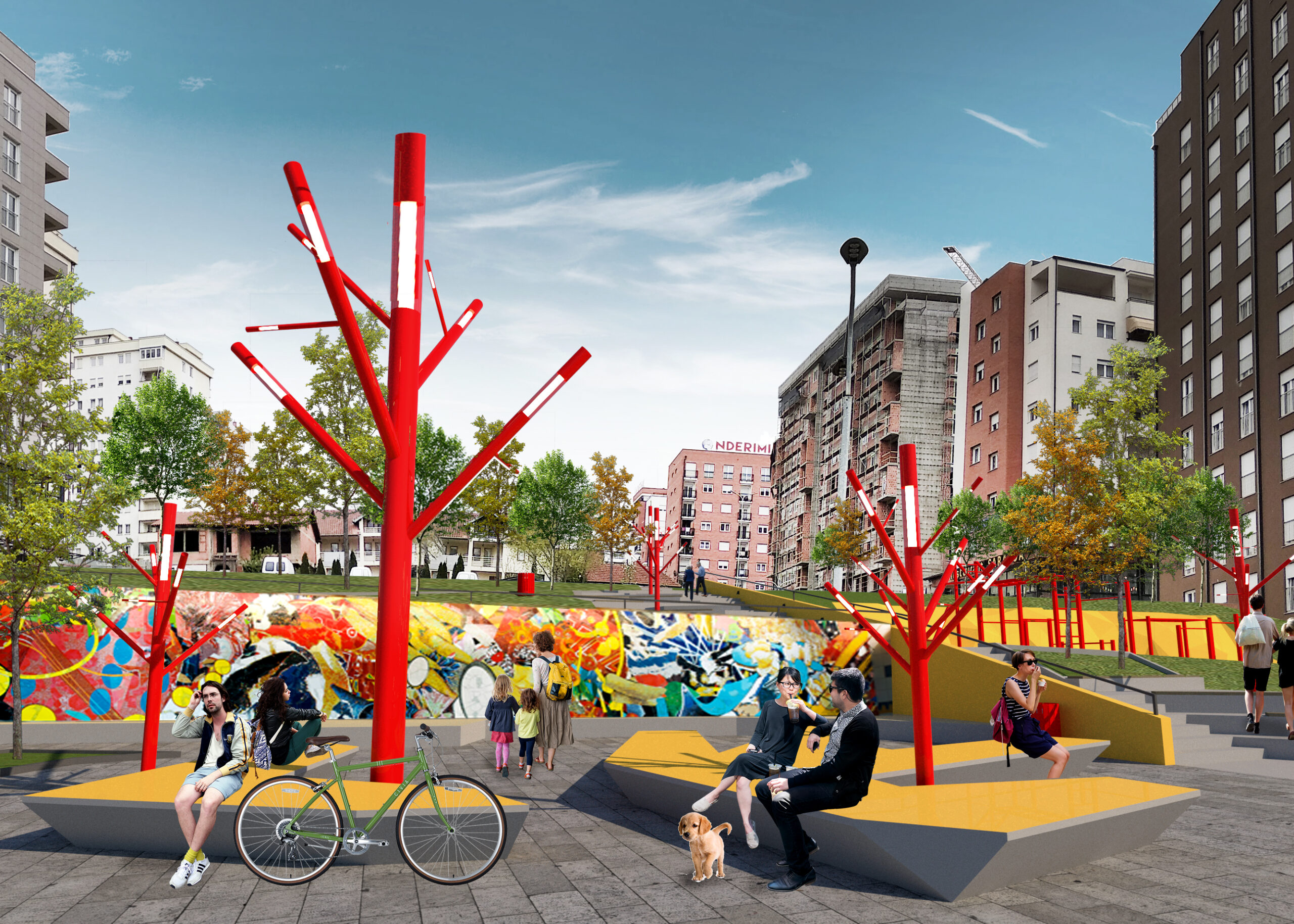
We advocate the restructuring of public policy and development practices to support the following principles: neighborhoods should be diverse in use and population; communities should be designed for the pedestrian and transit as well as the car; cities and towns should be shaped by physically defi ned and universally accessible public spaces and community institutions; urban places should be framed by architecture and landscape design that celebrate local history, climate, ecology, and building practice.
We represent a broad-based citizenry, composed of public and private sector leaders, community activists, and multidisciplinary professionals. We are committed to reestablishing the relationship between the art of building and the making of community, through citizen-based participatory planning and design.
We dedicate ourselves to reclaiming our homes, blocks, streets, parks, neighborhoods, districts, towns, cities, regions, and environment."
Universe is the aggregate of all humanity's consciously apprehended and communicated nonsimultaneous and only partially overlapping experiences.